404
404 is an interactive 3D digital environment that preserves a personal living space through video game design. I created the project to explore how memory, emotion, and domestic intimacy can be captured beyond traditional media, using interactive technology to simulate presence, atmosphere, and anticipatory nostalgia.
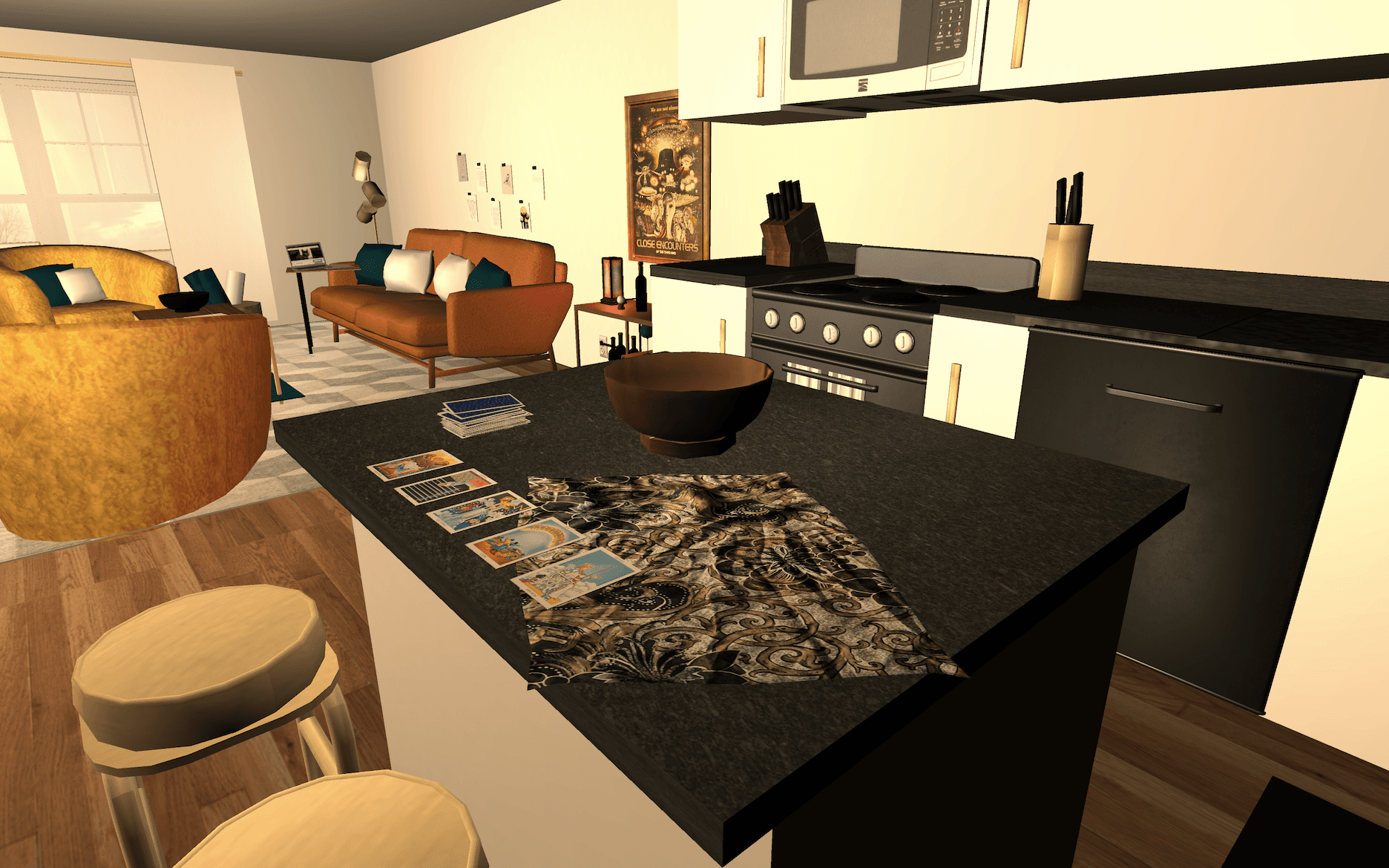
404 is an interactive 3D digital environment that preserves a personal living space through video game design. I created the project to explore how memory, emotion, and domestic intimacy can be captured beyond traditional media, using interactive technology to simulate presence, atmosphere, and anticipatory nostalgia.
My Role
My Role
3D Artist & Designer
3D Artist & Designer
Timeline
Timeline
2020-2021
2020-2021
Tools
Tools
Unity ProBuilder
Unity ProBuilder
Disclaimer: This project has been anonymized and redesigned to honor confidentiality and NDA requirements. All branding, naming, and visual/UI details shown here are conceptual and do not represent the original client.
Disclaimer: This project has been anonymized and redesigned to honor confidentiality and NDA requirements. All branding, naming, and visual/UI details shown here are conceptual and do not represent the original client.
Disclaimer: This project has been anonymized and redesigned to honor confidentiality and NDA requirements. All branding, naming, and visual/UI details shown here are conceptual and do not represent the original client.
Problem & Context
Memories of home are often preserved through photographs or video, yet these formats rarely capture the emotional texture of lived experience. Subtle details such as ambient sound, repetition, and mundane objects that make a space feel inhabited are often flattened or lost. This project explores how an interactive digital environment can serve as an alternative form of memory preservation, prioritizing atmosphere, embodiment, and emotional proximity over traditional documentation, with the goal of preserving how it felt to exist within the space rather than recreating it perfectly.
Memories of home are often preserved through photographs or video, yet these formats rarely capture the emotional texture of lived experience. Subtle details such as ambient sound, repetition, and mundane objects that make a space feel inhabited are often flattened or lost. This project explores how an interactive digital environment can serve as an alternative form of memory preservation, prioritizing atmosphere, embodiment, and emotional proximity over traditional documentation, with the goal of preserving how it felt to exist within the space rather than recreating it perfectly.
Discovery & Understanding
01
Memory Lives in Atmosphere, Not Artifacts
Early exploration focused on understanding how memory is tied to sensory and environmental cues rather than singular objects. Sound, spatial relationships, and repetition emerged as more emotionally resonant than visual detail alone.
02
The Domestic as an Emotional Interface
Domestic spaces function as quiet interfaces for daily life. Mundane elements—footsteps, background noise, idle moments—carry emotional weight precisely because they are unremarkable, making them critical to how memory is formed and recalled.
03
Interactivity as a Tool for Presence
Interactivity was identified as essential to preserving emotional proximity. Allowing users to move freely through the space created a sense of agency and embodiment that static media could not replicate.
01
Memory Lives in Atmosphere, Not Artifacts
Early exploration focused on understanding how memory is tied to sensory and environmental cues rather than singular objects. Sound, spatial relationships, and repetition emerged as more emotionally resonant than visual detail alone.
Interactivity as a Tool for Presence
Interactivity was identified as essential to preserving emotional proximity. Allowing users to move freely through the space created a sense of agency and embodiment that static media could not replicate.
03
The Domestic as an Emotional Interface
Domestic spaces function as quiet interfaces for daily life. Mundane elements—footsteps, background noise, idle moments—carry emotional weight precisely because they are unremarkable, making them critical to how memory is formed and recalled.
02
Final Experience
The final experience allows users to inhabit a preserved domestic space that feels quietly alive, filled with residual presence and emotional texture. By leveraging interactivity, sound, and spatial design, 404 functions as both archive and memory—holding the atmosphere of a lived-in home in a form that can be revisited without losing its intimacy. The project demonstrates how interactive systems can be used not to escape reality, but to preserve it.The final experience allows users to inhabit a preserved domestic space that feels quietly alive, filled with residual presence and emotional texture. By leveraging interactivity, sound, and spatial design, 404 functions as both archive and memory—holding the atmosphere of a lived-in home in a form that can be revisited without losing its intimacy. The project demonstrates how interactive systems can be used not to escape reality, but to preserve it.
The final experience allows users to inhabit a preserved domestic space that feels quietly alive, filled with residual presence and emotional texture. By leveraging interactivity, sound, and spatial design, 404 functions as both archive and memory—holding the atmosphere of a lived-in home in a form that can be revisited without losing its intimacy. The project demonstrates how interactive systems can be used not to escape reality, but to preserve it.The final experience allows users to inhabit a preserved domestic space that feels quietly alive, filled with residual presence and emotional texture. By leveraging interactivity, sound, and spatial design, 404 functions as both archive and memory—holding the atmosphere of a lived-in home in a form that can be revisited without losing its intimacy. The project demonstrates how interactive systems can be used not to escape reality, but to preserve it.
Curious to learn more?
Let's connect.
Curious to learn more?
Let's connect.
Curious to learn more?
Let's connect.